
2026 One Maryland One Book
Reader’s Guide – No Sense in Wishing
Extension Activities
Photo credit: [Baltimore cityscape at night from Federal Hill], by Jack Engeman. Courtesy of the Jack Engeman photographs (Coll118), the Photography Collections, University of Maryland, Baltimore County.
Select a topic to jump to related extension activities:
Passions
Interests and Passions
Time to complete: 5-10 minutes
Materials: Paper, pen/pencil, or computer
Following his car accident, Burney’s primary concern was not his injured hands or his sudden blindness in one eye, but rather the realization that he was missing a Lupe Fiasco concert. His desire to discharge himself from the hospital prematurely just to attend the show shows the strong influence Lupe Fiasco had on him. Despite this early preoccupation, Burney eventually fell out of love with Lupe Fiasco’s music in his adult life. He said the “style and flair” of Lupe Fiasco’s music faded over time (Glory, pg. 32).
- Reflecting on this level of dedication, what is a hobby or activity that you once enjoyed that made you feel like nothing else mattered?
- Do you still enjoy this hobby/activity? If not, what caused this change? Write your answer in short paragraph form and share it with a partner.
Freewriting
Be the Subject
Time to complete: 5-10 minutes
Materials: Paper, pen/pencil, or a computer with internet access
In a discussion between Lawrence Burney and Brooklyn-based journalist Shamira Ibrahim for the CityLit Project, Ibrahim describes the introspective analysis Burney has on his life as, “remarkably personal.” She goes on to say that “as journalists, as magazine writers, we tend to study a subject. We don’t tend to allow ourselves to be the subject.”
In a brief freewriting session, use yourself as the subject and reflect on a pivotal moment in your life. Think of a moment or event that changed your life in a meaningful way, positively, negatively, or somewhere in between. Consider these questions to guide your reflection.
- What moment or scene comes to mind? Describe it in detail.
- What about this moment made it so pivotal? Why would it belong in a story of your life?
- What were you feeling at the time? How do you feel about it now? Have your feelings changed?
- How did this moment change something for you? How did you absorb it or adjust to it?
- What songs, movies, smells, scenes, or words activate the memory of your moment?
Photo Reflection
Cover Story
Time to complete: 30 minutes
Materials: Paper, pen/pencil, or a computer
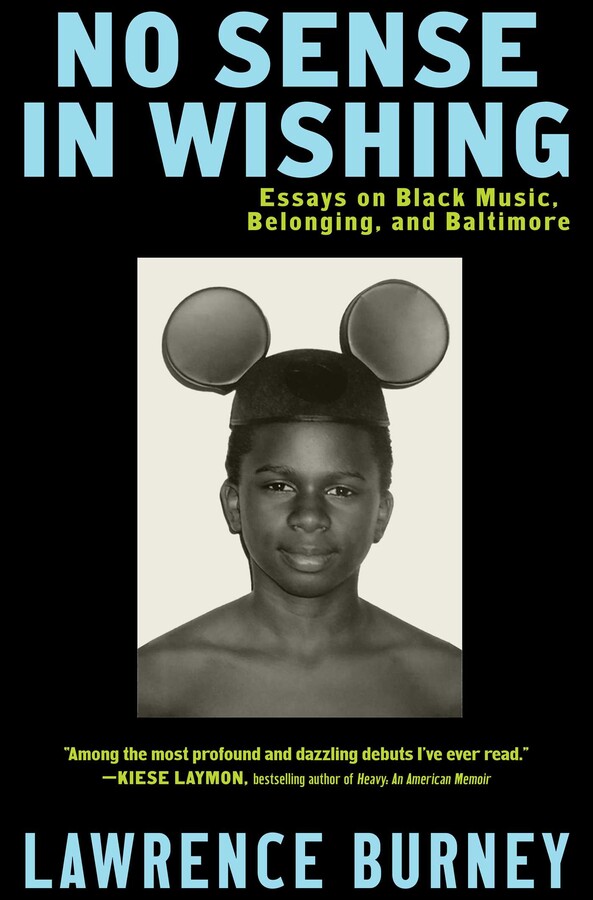
The cover photo of No Sense in Wishing is interesting in that it does not necessarily align with the themes of the book. The photo was taken by Burney’s uncle and holds significant sentimental value for him.
In this activity, reflect on the cover of the book and what it suggests to you. Next, identify a picture of your own that you think represents a book you’d write about your life.
- When you first saw the book cover, what did you think it meant? What feelings did it evoke? Did it give you an idea of what the book would be about?
- Imagine that you are going to write a collection of essays based on your experiences or an autobiography. What cover image would you use? If you do not have the image with you, write down a detailed description of the photo and explain why you would choose it. Do you think readers will understand your photo right away or is it up for interpretation?
Language
A Glossary of Home
Time to complete: 30-45 minutes
Materials: Paper, pen/pencil, or computer
Lawrence Burney’s creative output is linked to the unique language and culture of Baltimore. In No Sense in Wishing, he recalls instances during car rides with friends where he chose not to play tracks by local Baltimore rappers like Smash or regional club music because of the context he’d “need to provide for artists so tightly insulated within a microworld felt like a burden” (Two Pillars, pg. 66). Many individuals have a love for music or slang so closely tied to their personal history and identity that conveying their significance to others requires cultural translation.
In this activity, you will identify and write down words that have special meaning to you and reflect on their background.
- Create a “Glossary of Home.
List 5–10 words, phrases, or slang terms that are specific to your family or community. - For each term, write down what it means, the background behind it, when you use it, and why it matters to your identity.
- Swap your list with a partner. What does their list teach you about their culture? Did you notice any similar patterns in how you both use language or the context behind words?
Food
Tastes of Home
Time to complete: 45 minutes-1 hour
Materials: Paper, pen/pencil, or computer
To Burney, steamed crabs not only represent a Baltimore staple, but also a vessel for unwritten tradition and cherishing moments with family. He remembers cracking crab shells, laughing at what’s on TV, and says his family’s “…commitment to devouring as a unit these water spiders is crucial to our spiritual well-being” (“A Love Letter to Steamed Crabs Piled Onto a Bed of Newspaper,” pg. 51). Burney describes this family tradition as a “communion” that is customary for people raised along the Chesapeake Bay.
This activity invites you to share a recipe that is meaningful to you and explore the history behind it.
- Select a food or dish that represents your family history or cultural background. It can be any dish that holds personal significance.
- Write an “origin story” on your selected dish. Include details such as who made the recipe; any historical or cultural background you know or can research; What memories are triggered by its taste or smell?
- Prepare the dish or simply share the recipe with someone else (a friend, classmate, or family member). As you share it, reveal the “origin story” that you wrote.
- Write a brief reflection on this activity by describing how this dish connects you to your community or personal history. Do you plan to pass this recipe on or keep it a tradition in your life?
Painting
New Perspectives
Time to complete: 1 day
Materials: Paper, pen/pencil, or computer
In “A Love Letter to Steamed Crabs Piled Onto a Bed of Newspaper,” Burney writes a vivid description of the painting Maryland Crab Feast by Tom Miller. He concludes his description with, “Only a deep [respect] for the activity depicted could produce such potent accuracy,” (pg. 55).
Read through the analysis of Maryland Crab Feast on pg. 55. Afterwards, find a painting or art piece in your home or in a community space and analyze it like Burney does. Consider the following:
- Who are the characters in the piece, and what are they doing? How are they positioned and portrayed?
- What are the visual elements of the piece? What do they form when they come together?
- What is something you didn’t notice before? How does that change the piece?
- What is the piece trying to depict or trying to say? What is your interpretation of it?
- How does the piece add to the atmosphere and ambiance of the room?
Next, reflect on what you found.
- Do you appreciate the artwork more after analyzing it? Did writing about it change your understanding?
- What do you notice now that you didn’t notice before? How does a closer look at the artwork change your perspective?
Mapping
Map Your Story
Time to complete: 1-2 days
Materials: Paper, pen/pencil, or computer/device with internet access
Burney’s essays feature many significant locations. These include neighborhoods in Baltimore, a borough in New York, and cities in Nigeria and South Africa. Navigate through this interactive map that showcases major locations in No Sense in Wishing.
If the map is not fully visible on your webpage, click the above link to access it on StoryMapJS.
Refresh site if broken.
Make your own map of 3-5 locations and places that are important to you, your history, your family, or your story.
- Begin by drafting short descriptions of your locations in a notebook or on a computer. Write 4-5 sentences about why each place or location is significant to you and think about any images that help illustrate the place.
- Use Knight Lab Story Maps, a free and accessible platform, to create your interactive map.
- Create an account using an email. If needed, multiple people can use the same account and work on different maps.
- After creating an account or logging in, give the map a name and click ‘Create.’
- Knight Lab Story Maps formats the maps in slides. Each slide has a headline and text box where the text goes.
- There is an option to add media to each slide. This can be done through pasting a website into ‘URL to your media’ or uploading an image from your computer. There are also textboxes for image credits and captions.
- Use the textbox outlined in red to place a pin for each slide. You can type in a location or enter coordinates, and it will generate options based on what you typed. Pick whichever fits, and it’ll place a pin on that location.
- You can change the order of the slides by dragging and dropping the slides on the dashboard to the left.
- Video tutorial
Music Interview
The Soundtrack of Our Stories: A Family and Community Interview Guide
Time to complete: 1-2 days
Materials: Paper, pen/pencil, or computer
No Sense in Wishing tells stories about the importance of music in creating intergenerational connections. Music can tell a story, create memories, and be used as an expression of culture.
This activity invites you to interview a family member or a relative of another generation to learn more about their music tastes and see if they have influenced your own. Use the worksheet below to guide your interview.
Community
Neighborhood Walkthrough
Time to complete: 1-2 days
Materials: Paper, pen/pencil, computer, printer
Burney advocates for people to explore their neighborhoods and to understand the food, art and culture of their community. He believes that a neighborhood is defined by its people and memories, not just its geography. For him, the Belair-Edison neighborhood is defined by his childhood memories of the community and the culture.
Find a map of your surrounding neighborhood and walk to a block or street you’ve never been to before. Is it what you expected? How is it similar or different to your neighborhood? Use your thoughts and observations to complete the worksheet.
History
The Black Men of the Sea
Time to complete: 1-2 days
Materials: Paper, pen/pencil, computer/device with internet access
In “A Love Letter To Steamed Crabs Piled Onto A Bed of Newspaper,” Burney talks about the history of northeastern Black men working on ships.
Do further research into this history, reading through 1-3 sources to get a grasp of their story. Then use those sources to answer the questions in the worksheet below. Finally, reflect on the information you learned.
Use these sources as starting points for your research:
- Talbot Historical Society: Watermen and the Seafood Industry
- Blacks of the Chesapeake Bay – Maryland State Archives
Consider using these in your research:
- Google Scholar
- Library databases (Visit your local library’s website)
- Digital archives (Hosted by museums, universities, and other institutions online)
Global Art
Travel Itinerary
Time to complete: 1-2 days
Materials: Paper, pen/pencil, or a computer/device with internet access
In “Welcome Home,” Burney describes his travels to South Africa and Nigeria. He traveled there to engage with the local music scenes. He attended several festivals and music shows, like an Afropunk festival in South Africa, and visited venues like the Hard Rock Cafe to connect with communities.
Put yourself in Burney’s shoes and pick a place you would like to visit to engage with an art form of your choosing, like music, visual art, film, etc. Create a 3-5 day itinerary, explaining what you would do each day if you had the chance to visit this destination.
Things to consider:
- Create and follow a budget where you factor in lodging, transportation, food, flights, etc.
- See through the eyes of a tourist! Find places to sightsee and opportunities to learn about local culture.
- For at least half of those days, find a way to engage in the art form you chose, such as going to a museum, concert, or show and local venues. Research ways to step off the beaten path and find out where local communities enjoy your chosen art form.
- Write your findings down in a list format, or create a slideshow that you can share with your class or reading group.
- Be as realistic as possible! (no private jets or five star hotels)
Playlisting
Music And Reflection
Time to complete: 3-5 days
Materials: Paper, pen/pencil, computer/device with internet access, Spotify
Music plays a big role in No Sense in Wishing as Burney referenced many songs and albums as he retells pivotal moments that shaped his growth and his identity. Burney has compiled all of the songs he mentioned into a Spotify playlist for audiences to listen to as they read.
Listen and Learn
- Independently or with a partner, listen to a track from Burney’s playlist.
- Record your initial impressions and any specific elements of the song that catch your attention.
- Then, listen to the track a second time while following along with the lyrics. Did reading the lyrics change your perspective or clarify any previously uncertain parts?
Close Listening Sessions
- Pick one or two songs from Burney’s playlist and carefully listen to them with your group.
- Discuss what parts of the song you like the most and the significance of the song in both the book and the communities Burney references.
Make Your Own Playlist
- Title the playlist with a name that represents the central theme, if there is any.
- Choose a song from your upbringing.
- Include a song that you used to like but now you don’t.
- Select a song that you used to dislike but now you enjoy.
- Add a song that reminds you of a place that’s important to you.
- Pick a song that reminds you of a pivotal moment in your life.
- Choose songs that feel important to your life or you as a person.
- What/who has influenced your song choices?
Photo Album
“Tha Bloc”
Time to complete: 1-2 weeks
Materials: Paper, pen/pencil, or computer
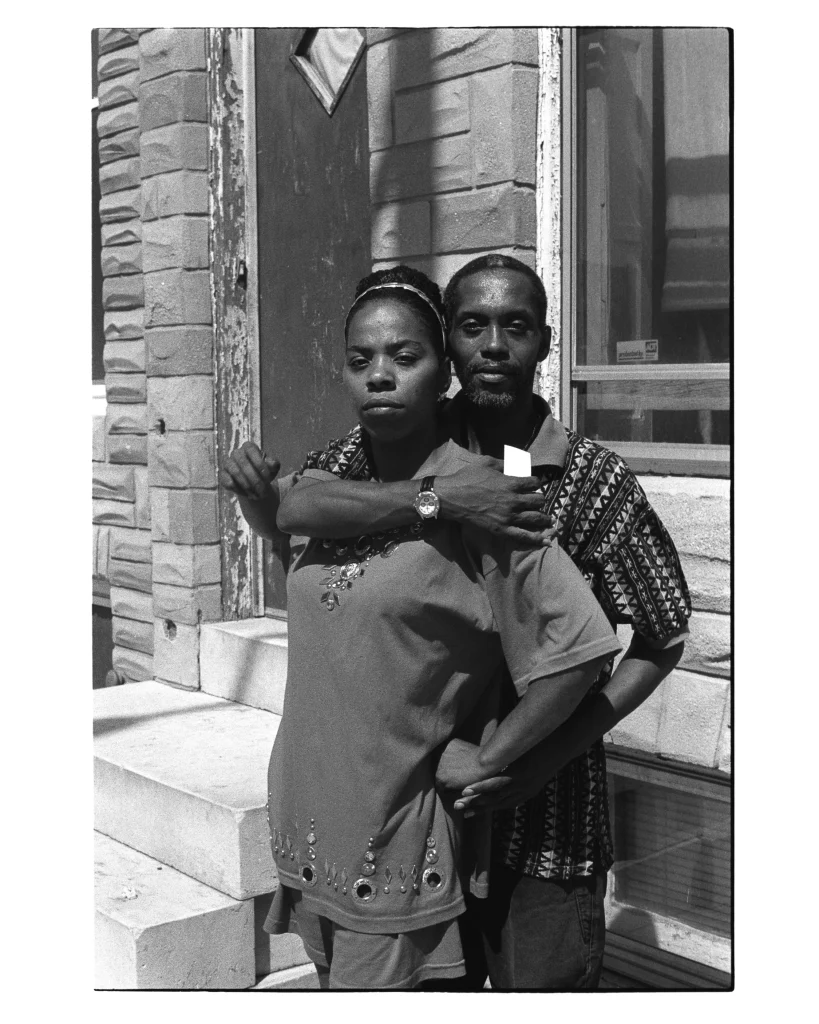
Burney and his friend Deej’s blocks were separated by Mannasota Avenue in Baltimore (Revisiting Ramona, pg. 95). Burney writes that despite their physical proximity, they somehow coexisted as neighbors without ever knowing each other until their adulthood. Deej showed Burney a small rectangular book titled Tha Bloc: Words, Photographs, and Baltimore City in Black, White, and Gray.
Inside this book were photos of the neighborhood and children living there as well as photography and poetry representing Ramona Avenue. Burney says that Deej’s uncle, Mr. Ellis, who created the collection, “observed the conditions around him with rigor and beauty, painting a textured portrait of people who spent the majority of their time–contrary to racist framing on the news–working and making a way for their families” (Revisiting Ramona, pg. 96). Burney writes that Tha Bloc became a guiding light for him in building his blog and zine.
In this activity, you will create a collection of photographs, poetry, and other creative elements to portray your community, inspired by Mr. Ellis.
You may use this article written by Burney in True Laurels about Tha Bloc: Revisiting ‘Tha Bloc’
- What type of community do you want to focus on? (e.g., neighborhood, school, culture)
- Brainstorm a list of media that you could include in your collection (photos, poems, historical facts, interviews, paintings).
- Is your media collection digital or physical?
- If digital, choose a platform that allows for easy incorporation of media (PowerPoint, Canva, etc)
- If physical, choose a scrapbook or an empty notebook
- Is your media collection digital or physical?
- Compile the collection. Aim to have at least 4-5 pieces of media that represent your community.
- Put all pieces of media on your selected platform/notebook
- Give your collection a unique title that reflects the theme you have chosen.
- Reflect on the pieces you have selected and share with a friend, classmate, or reading group.
Journalism
Be a Critic
Time to complete: 1 week
Materials: Paper, pen/pencil, computer/device with internet access
Lawrence Burney is a memoirist, journalist, advocate, and critic. He has worked with publications like Vulture, GQ, and Pitchfork.
In this activity, you will adopt the persona of a critic and write a cultural review of a piece of media that is important to you. Keep in mind that being a critic is not always the same as being critical. Critics analyze things (music, movies, news) in order to better understand them, contextualize them, and see them more fully and clearly.
Before you start writing:
Analyze how a critic contextualizes their objects of study. Choose 1 or 2 articles linked below, or find another article written by Burney. As you read through, highlight sentences where Burney references the history or culture behind a piece of media. Note the style of writing; how does he balance his opinion with evidence-based research? How does he include both personal reaction and more objective information?
- Burney’s articles:
- Hugh Mundell: Africa Must Be Free by 1983 Album Review | Pitchfork
- Baltimore’s Iconic Royal Theatre Hosted Some of the Greatest Talent in American Musical History
- Pieces of a Man
- The Gospel Of YG Teck
- André De Shields is living proof that patience, grace– and a whole lot of talent– will eventually get you to the top.
- Turnstile Blew Up. Now What?
- Now that you have read one or two articles, it is time to start brainstorming what you’ll review. What type of media are you interested in exploring and critiquing? Music? Film? Visual or performing arts? Write down your ideas and choose one object of study for your review.
- Before you start writing, identify the creator(s) of your media and the purpose of their work. Briefly summarize the media in an objective, non-opinionated way. Point out any of the creator’s possible biases or assumptions that the creator of your chosen media has made.
- Craft a 400-500-word review of the media you selected and give it a creative title. Key parts of a review include an introduction, summary, critique, conclusion, and references. If needed, you may use this guide Writing a Critical Review, to help write. Be sure to use your own, unique voice as you write!
Reader’s Guide
Every year we work with educators and partners to bring you relevant information to enhance your reading of the One Maryland One Book. Here are some ways you can read along with us.
Read a welcome message from Maryland Humanities staff.
See bios, statements, and learn more about the book’s themes.
Activities in the Teacher’s Guide assist in the practice of these Maryland curricular requirements.
Prompts to guide your conversations about the book.
Activities and curricular guides arranged by subject for interdisciplinary exploration.
A collection of images related to this year’s book selection.
Related reading and other recommended resources to augment the book.
The people and organizations that helped us compile the content and resources of this guide.