
Written by: Kevin Lopez Cruz
The phrase “the humanities” tends to arrive carrying more furniture than it needs.
It can make the humanities sound like something that lives somewhere else: in a classroom, a museum, a library, or a university department. It can suggest a body of knowledge held by people who have learned a specialized language for discussing it. Or perhaps a realm of the arts in which most of us are expected to watch from the outside. Even the phrase “public humanities” can reinforce that impression, as though the task were to take something already formed and deliver it to a wider audience.
But most humanistic work begins much closer to home, before anyone gives it a name. It begins with the basic problem of meaning. Life supplies us with more experience than explanation, and we spend a great deal of time trying to close this gap. We interpret what people say. We reconsider what we once believed. We decide what deserves our attention and what kind of significance to give what has happened to us.
This is ordinary life. It is also the humanities.
The distinction matters because it changes the case we make for them. If the humanities are mainly understood as subjects, the argument for supporting them quickly becomes an argument about preserving particular disciplines or programs. Those arguments are worth making, but they begin too far downstream. The deeper reason to care is that humanistic thought names a capacity people already rely on: the ability to stay with a question when information alone cannot settle it.
A great deal of life takes place in this territory. Facts tell us what happened without telling us what to make of it. More information can sharpen a decision without making the decision for us. Even perfect access to knowledge would leave untouched the problem of judgment: deciding what deserves our attention and how much confidence we should place in our own conclusions.
The pressure on the humanities, then, comes from how easily contemporary life crowds out the forms of thought these questions require.
Much of contemporary life is organized around speed and usefulness. We are rewarded for reaching an answer quickly and moving on. That makes sense in many settings. However, it becomes a problem when the same standard is applied to forms of thought that require pause. Some ideas become clearer only after our first interpretation breaks down. Reflection is inefficient by design.
This is also why reducing education purely to its economic return leaves something essential out. Preparing people to earn a living is a serious responsibility, though a labor market cannot tell a person what deserves devotion or how to live with uncertainty, regret, and changing convictions. They are part of having a life.
Education also shapes the ways people encounter a world they did not choose and cannot fully control. Students will leave classrooms and enter institutions, communities, workplaces, and public debates that ask them to interpret competing accounts of what happened and what should happen next. The capacity to read closely, question inherited assumptions, sit with ambiguity, and revise an interpretation in light of new understanding belongs to that preparation. A society that treats these capacities as expendable eventually discovers how often public life depends on them.
A statewide humanities organization cannot manufacture curiosity or judgment, and it does not need to. Marylanders already bring those capacities with them. The work is giving those capacities somewhere to go: creating occasions where people can stay with difficult questions and give ideas sustained attention without demanding an answer on schedule.
The humanities are already everywhere in Maryland because meaning is everywhere. The question is whether we will continue to make room for the difficult, sometimes slow work of finding it.
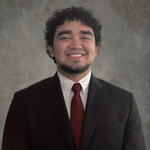
Kevin Lopez Cruz is an undergraduate at Bowie State University, Maryland’s first and oldest HBCU, where he is pursuing a B.A. in English. He has worked with the Library of Congress, Maryland State Archives, Folger Shakespeare Library, and University System of Maryland. He is also a member of the Board of Advisors for the Bowie State University Thurgood Marshall Library. His writing and public service focus on the humanities, education, public memory, and democratic participation.